For more than a century, Rakowiecka Prison witnessed the most dramatic chapters of Polish history. Today, this former prison is becoming a museum dedicated to the victims of totalitarian regimes and the fight for freedom. Discover the story behind one of Poland’s most important places of remembrance.
The building complex at 37 Rakowiecka Street was a fully functioning prison facility from 1902 until 2017 throughout different political systems and regimes. Its beginnings date back to the era of partitioned Poland (1795-1918) with Warsaw under imperial Russian rule. From 1918 to 1939, the short inter-war period of free and independent Poland it served as a modern prison for this part of the country.
After the German attack on Poland on September 1, 1939, Rakowiecka became the seat of the Kripo – the Nazi-German criminal police. On August 2, 1944, the walls of the prison complex witnessed a horrible war crime when the Germans murdered 700 people and buried them on the prison grounds.
In 1945, when the Red Army entered Warsaw, the NKVD took over the prison. Shortly after, it became a central prison of the Ministry of Public Security. During the Stalinist era, the period of the greatest terror (1945-56), the prison at Rakowiecka 37 was a place of torture and death of hundreds of Polish patriots murdered by the communist authorities that have been imposed on Poland by the Soviet Union.
In the 1960s, 1970s and 1980s, oppositionists who fought for freedom and human rights were held in this prison. From 1981 to1983, during the Martial Law era prominent activists of the „Solidarity” social movement were imprisoned in Pavilion 3 (previously known as Pavilion XII) of the prison. After the fall of communism in Poland in 1989, the prison at Rakowiecka 37 ceased to be a political prison and became a regular, criminal facility. In 2017, the last prisoners left its cells, and a decision was made to transform the facility into a museum. Rakowiecka 37 is now, in the minds of Poles, primarily a place of remembrance.
Scientific research, collecting artefacts and designing a permanent exhibition are only a few of the tasks related to the creation of the museum. We are constantly working to adapt the buildings of the former prison to the needs of a modern, full-scale museum facility.
Scientific research, collecting artefacts and designing a permanent exhibition are only a few of the tasks related to the creation of the museum. We are constantly working to adapt the buildings of the former prison to the needs of a modern, full-scale museum facility.
In 2023, a section of the prison wall, the „wall of death”, was restored. According to the testimonies of prisoners at Rakowiecka it was here that death sentences had been carried out on soldiers of the anti-communist underground during the Stalinist period. Also in 2023, we invited design studios to prepare the architectural and urban concept of our museum. The renovation process is planned to take several years. In the first stage, the prison complex buildings that were used as workshops for prisoners and the boiler room are to be renovated. This area will be transformed into a visitor services sector, a temporary exhibition area, a performance hall, a reading room, and rooms for educational activities and scientific research.
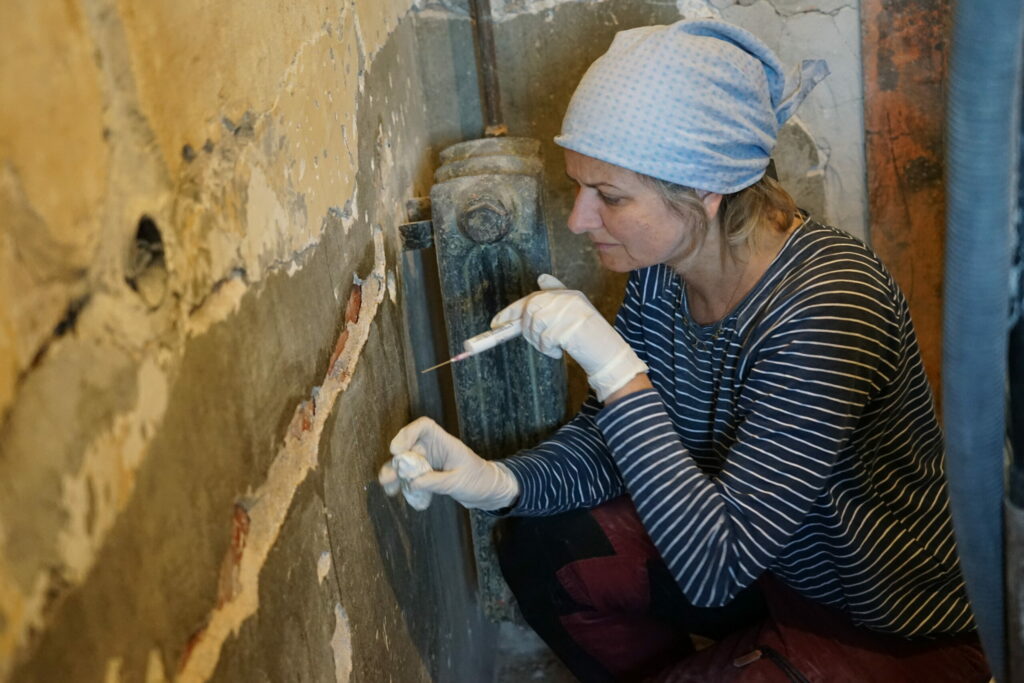
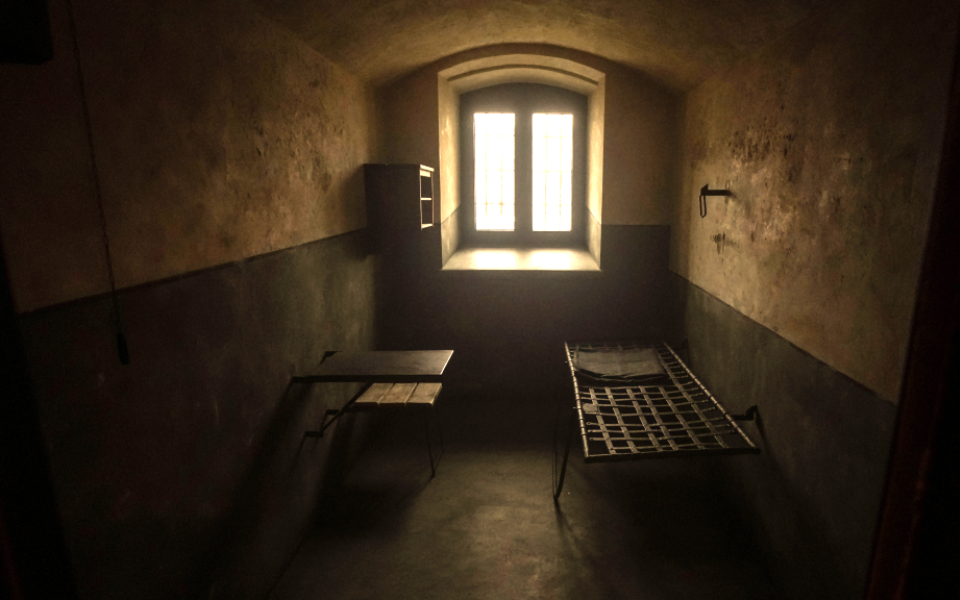
In 2024, we prepared a study on conservation, conducted research, and restoration work in the execution cell, where the prison gallows were located. We also carried out conservation work in two cells of Pavilion X, aiming at verifying the information about the Prison drawn from written historical sources. We have opened a visitor zone: a waiting room for guests attending a guided tour and a museum shop where visitors may purchase historical publications and souvenirs. We have also prepared a temporary exhibition room, where we have already presented several short-term exhibitions.
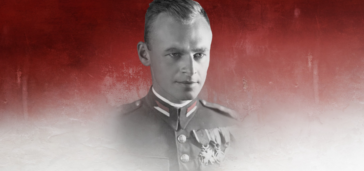
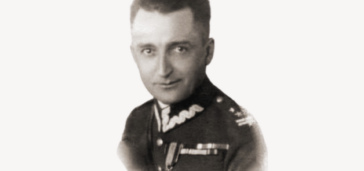
In 2025, we prepared the design and cost estimate documentation of estimated costs, which is the basis for the planned reconstruction and adaptation works in Pavilion X, where soldiers and commanders of the Polish independence underground were imprisoned. We wish to restore the interiors of the prison to its original appearance from 1945-1955, as Pavilion X is a silent witness to a dark era of our history and the suffering of its heroes.
We have a great task ahead of us to turn the one of the cruelest prisons of the German and Soviet occupation into a museum that tells this difficult story and serves as a testament to the memory of the sacrifice of hundreds of Poles who fought for the freedom of their homeland.
Text by Anna Śnieżko, in collaboration with Maria Krasnodębska